Posts

Noncontact Heart Rate Detection with Soli Radar Technology
Image
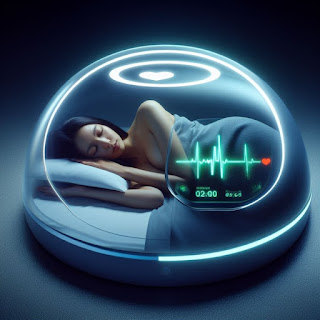
Traditionally, heart rate (HR) monitoring requires the use of wearable devices, which can be inconvenient and uncomfortable, particularly during sleep and meditation.  A study published yesterday in Scientific Reports introduces a non-invasive approach to noncontact HR detection, utilizing Soli radar technology (millimeter wave radar) embedded in a portable device, in this case, the Google Nest Hub. The Soli radar chip featured in this study offers a compact dimension and can be easily integrated into various devices, making it a promising alternative to traditional HR monitoring methods. Unlike existing approaches in the literature that rely on high-gain antennas and facing the user's chest or back, this Soli-based approach overcomes these limitations, making it suitable for sleep and meditation tracking applications. Advanced signal processing (SP) and machine learning (ML) techniques achieve impressive accuracy levels on two distinct datasets: a sleep dataset comprising data fr...

Assessing Vascular Elasticity through Heart and Pulse Rhythms

Image
A novel inexpensive diagnostic methodology promises to enhance our understanding of vascular elasticity. This innovative approach leverages the patient's heart and pulse rhythms to assess the flexibility of blood vessels.  The elasticity of blood vessels, the ability of their walls to stretch and contract, plays a pivotal role in our cardiovascular health. When blood vessel walls become stiffer, individuals become more sensitive to fluctuations in blood pressure, making them more vulnerable to serious conditions like atherosclerosis and heart disease. The scientists at Samara University have proposed a more straightforward method for evaluating vascular elasticity. This methodology is based on the analysis of differences between the patient's heart and pulse rhythms. According to Dr. Alexander Fedotov, an associate professor at the Department of Laser and Biotechnical Systems at Samara University, "Periodic fluctuations in arterial blood pressure, known as Mayer waves, can...

Isometric Exercise for Cardiovascular Health

Image
The management of blood pressure is an integral part of maintaining cardiovascular health. Hypertension, or high blood pressure, places the cardiovascular system under persistent stress, leading to an array of complications such as heart disease, stroke, and even kidney disease. It's a silent adversary, often showing no immediate symptoms, yet it can have serious long-term effects on the body's overall health. Proactive measures to manage and maintain healthy blood pressure levels, including regular exercise, dietary changes, and routine check-ups, play a critical role in preserving cardiovascular health and promoting overall wellbeing. The landscape of exercise and fitness has been dynamic and intriguing, with different modes of training showing varying impacts on cardiovascular health. A recent large-scale review, which analyzed 270 randomized controlled trials involving 15,827 participants, has thrown a spotlight on a seemingly underrated type of exercise: isometric exercise...

AI Outperforms Sonographers in Assessing Heart Function

Image
A study published in the peer-reviewed journal "Nature" found that artificial intelligence (AI) is better at assessing heart function than sonographers. The study was conducted by investigators at the Smidt Heart Institute and the Division of Artificial Intelligence in Medicine at Cedars-Sinai and was a first-of-its-kind, blinded, randomized clinical trial of AI in cardiology. Cardiologists more frequently agreed with the initial assessment made by AI and made corrections to only 16.8% of the AI initial assessments. Cardiologists made corrections to 27.2% of the sonographers' initial assessments, and the physicians were unable to distinguish between AI and sonographer assessments. AI also saved cardiologists and sonographers time. The hope is to save clinicians time and minimize the more tedious parts of the cardiac imaging workflow. However, the cardiologist remains the final expert adjudicator of the AI model output. Regulatory approvals are now needed for such tools to...

AI for Predicting Heart Transplant Outcomes

Image
A recent review has highlighted the growing use of artificial intelligence (AI) in managing post-heart transplantation (HTx) and mechanical circulatory support (MCS) clinical care. This technology is particularly promising in the field of heart failure practice, where many decisions are often made based on expert opinions in the absence of high-quality data-driven evidence.  The review specifically focused on studies that examined post-HTx care, including post-operative management and long-term outcomes. The most common data sources used for development, training, and validation of AI algorithms are the United for Organ Sharing (UNOS) and the International Society of Heart and Lung Transplantation (ISHLT) registry. The primary outcomes studied include 1-year mortality or recipients, survival time, dependence on chronic dialysis, and graft survival. The machine learning models used include neural networks, support vector machines, random forests, and gradient-boosted machines. The p...

ACEI or ARB?

Image
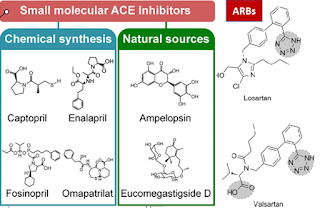
Lowering high blood pressure is associated with significant reduction in all major cardiovascular events, all-cause mortality, stroke, coronary events, and heart failure. Since medicine is still not personalized neither particularly precise, guidelines  for choosing the right drug keep evolving.  For adults with hypertension requiring pharmacological treatment, the following three classes of pharmacological antihypertensive medications are used as an initial treatment: diuretics , ACE inhibitors or ARBs , and calcium channel blockers.  ACE inhibitors (ACEIs) reduce the activity of the angiotensin-converting enzyme (ACE) which is responsible for hormones that help control blood pressure.  Synthetic ACE inhibitors, such as captopril, enalapril, lisinopril, and temocapril, are in clinical use for the treatment of hypertension. Lisinopril is found to have significant negative effect on perceptual motor skills, thus other ACE inhibitors such as Benazepril, Fosinopril,...

Multiscale Cardiac Monitoring with No Physical Contact: An Investigation Using Impulse Radio Ultra-Wideband Radar

Image
Currently, the most common methods for detecting cardiac information are electrocardiography (ECG) and photoplethysmography (PPG). ECG uses metal electrodes placed on the body to detect electrical signals, while PPG uses optical sensors at the wrist or finger to detect changes in blood volume. While these methods are widely used in clinical settings, they require physical contact and may not be suitable for continuous, real-time monitoring in certain situations. To address this, researchers are exploring the development of a contactless method for detecting cardiac information that could be used for next-generation medical monitoring and home healthcare. Such a method would have many potential applications and could improve the accuracy and accessibility of cardiac monitoring. In a paper published this month, a new method for measuring cardiac motion using impulse radio ultra-wideband (IR-UWB) radar at a center frequency of 7.29 GHz is proposed.  This method aims to improve upon tr...